
How We eat
The eating environment
There are many benefits attached to the eating environment and sharing meals together. When they
can, parents/carers should provide an environment for eating well in a non-distracting environment.
Distinct mealtimes throughout the day and ensuring children have regular meals including breakfast
will help young children to develop healthy eating habits and lifelong skills for young children.
Young children should never be alone while eating, they should be encouraged to sit down, and chew
food properly. Some food may need additional preparation particularly for very young children like
chopping and slicing some fruits, removing stones and avoiding nuts.
Children are born as ‘competent eaters’, with the ability to gauge their body’s need for food. They will
respond to hunger and fullness and responsively feed while both breast and/or bottle feeding. Most
children can regulate their own appetite, although over time they often learn to ignore these signals.
Children have small stomachs and will eat regular small amounts to meet their requirements. Helping
children to tune into their appetite, and also stop eating when they are full will help develop good
eating habits.
Top Tips
- Focus on making ‘everyday’ food available.
- Lead by example and model the enjoyment of ‘everyday’ food. As a parent or carer eat good quality food. Children are likely to copy you.
- Try to stick with a good mealtime routine with regular meals e.g. breakfast, lunch and dinner and only small nutritious snacks in between that keep children from getting too hungry. Eat meals as a family when you can.
- Encourage an active lifestyle by enjoying activities together with your child.
- Encourage your child to eat when they are hungry and stop when they are full.
- Comfort children with attention, listening and hugs instead of food.
- Create a non distracting environment, separate eating from other activities
- Enjoy balanced meals and a varied diet
- Try new foods and recipes
Portion Size
Children’s appetites can vary for a number of reasons; some children will eat more, and some will eat less. It is normal for a child’s appetite to vary across a week and as they grow. Portion sizes should be varied to meet the needs of each child.
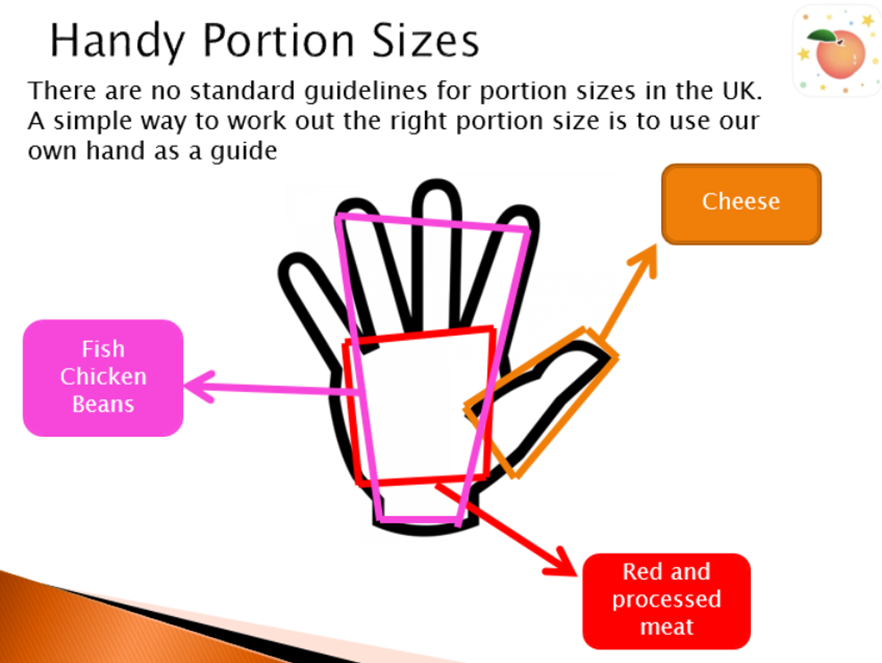
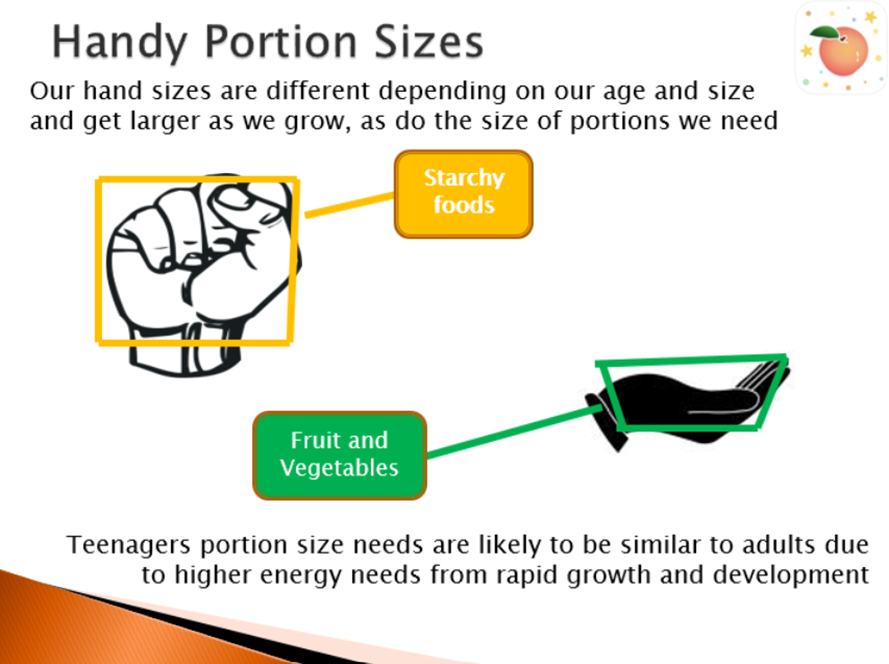
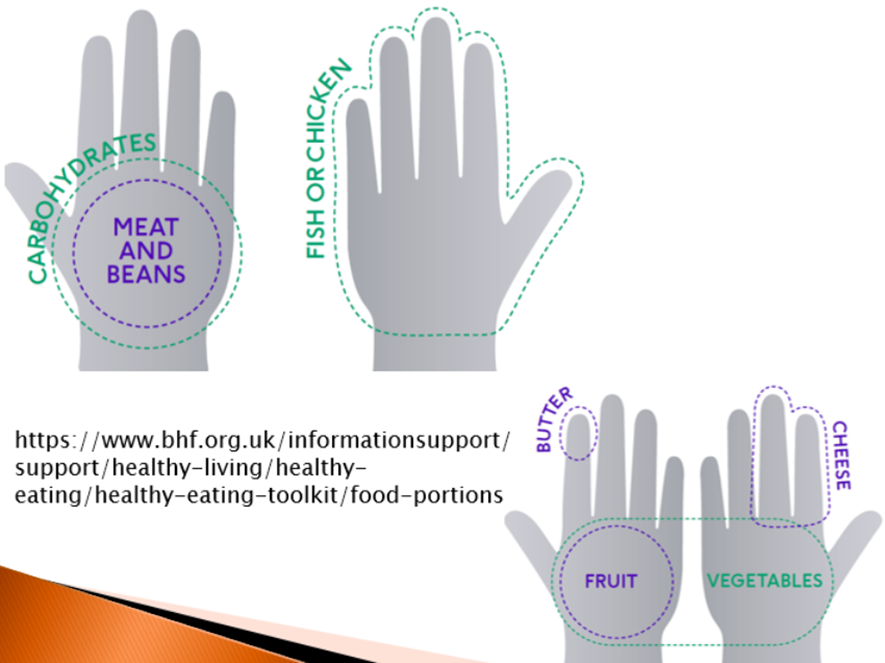
There are no standard guidelines for portion sizes in the UK. However, a simple way to work out the suitable portion size is to use our own hand as a guide.
Remember- our hands are all different sizes and so are our portion size needs.
Top Tips:
- Base meals on the EatWell Guide
- Start meals with small servings, let children ask for more if they are still hungry
- Be aware that pre-packed meals are usually sold as adult portions, children may not need the full serving
- Use smaller plates and bowls for children to help with portion control
- Avoid making children finish everything on their plate or eat more than they want to
- Encourage children to eat slowly and have set mealtimes
- Thirst can be confused with hunger. Try drinking a glass of water instead of eating an extra snack close to a main meal time
