

Your Family’s Guide to Living Well
Welcome to Thrive, if you are thinking about making lifestyle changes to improve your family’s health then you have come to the right place! Change can feel like a big step but we don’t need to change everything at once as big scale changes are usually quite difficult to keep going and might not be popular with the whole family. It’s best to make smaller changes and build on their success over time.
It doesn’t matter where you are starting from, Thrive is designed to provide guidance and tools you can
adapt to your own circumstances giving your family the skills and confidence to manage your own journey making
changes that last!
However, if you do need some extra support, head to the Services and Resources in your area section for some more information
Everyday Tips for a Healthier Lifestyle
- Eat more fruit and vegetables — aim for at least five portions a day.
- Keep hydrated by drinking plenty of water.
- Cut back on sugary snacks and drinks.
- Move more every day — from walking the dog to dancing in the kitchen!
- Get enough rest and look after your mental wellbeing


A good place to start is thinking about what we eat and how we move and sleep all of these contribute to our overall health and wellbeing.
Click on the icons to discover a little more detail:





Click a fruit to reveal useful information






Talking to Your Child About Weight and Health
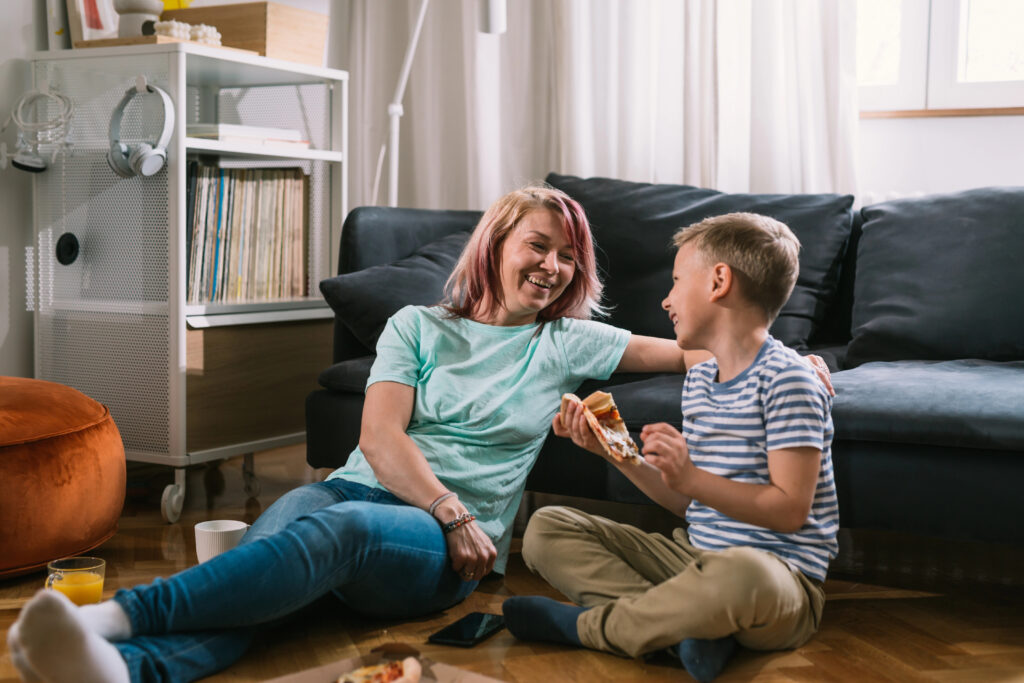
Here are some tips that can help you with the conversation:
- Speak in a warm and supportive way and listen to your child’s thoughts and feelings
- Talk about how health, energy and what the body can do are more important than numbers
- Focus on health rather than appearance. Helping your child see that everyone is unique encourages self-esteem and lifelong healthy habits.
- Avoid blame, focus instead on the healthy things you and your family can do together, reducing pressure on the child and frame lifestyle change as a shared journey
- Reinforce that everyone deserves respect, whatever their body size, shape or ability and try to model this yourself. Children learn from what they see and hear at home so speaking kindly about yourself and others helps them to develop a positive, respectful view of their own body.
You can find more useful information in our promoting positive body image section

Need a bit more help or have Questions or Worries?
Every family is different – and sometimes a little extra support can make a big difference.
Whether you’re facing challenges at mealtimes, have questions about your child’s eating habits, or simply want to make healthy changes as a family, you don’t have to figure it out alone. We’re here to listen, guide, and support you – no judgement, just practical help.
Our team can connect you with local services, trusted resources, and real advice tailored to your needs. Even a small conversation can be a helpful first step.
Not sure if you need support? Lots of parents feel the same way.
