How to talk to children and young people about weight and health
Talking About Health and Weight
Talking about weight and health with children and young people can be difficult. It’s completely normal for parents and carers to feel unsure, uncomfortable or worried about raising the topic of weight. Many adults have their own experiences, pressures or emotions around weight, and that can make the conversation feel even harder.
You don’t need to have all the answers. What matters most is creating a safe space where your child feels heard and supported. You know your child best and it’s up to you whether to talk to your child about healthy bodies or not.
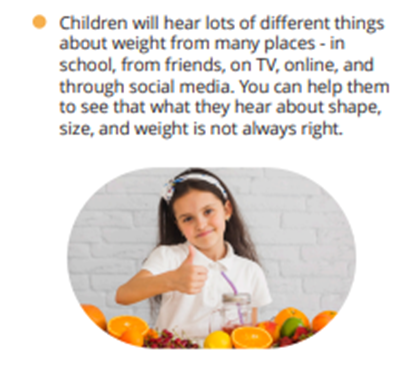
Children are naturally curious they hear messages about weight and body image from friends, school, TV, and online. Children may raise the topic because of something they’ve heard, seen or felt. Having a calm, supportive chat gives them the chance to ask questions and understand what “healthy” really means. Open conversation can help build trust and reassurance that weight is not something to be ashamed of. The British Dietetic Association advises that the most important thing is helping your child feel comfortable talking with you. Let them know that weight is just one part of health, and that everyone children and parents alike sometimes find it hard to make healthy choices.
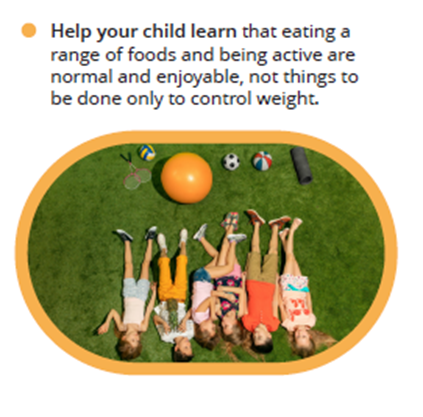
Avoid blame and focus on what you can do as a family preparing meals together, getting active outdoors, and talking about the small everyday influences that shape how we eat and move, such as adverts or busy routines. These discussions help children build confidence, make healthier choices, and feel good about their bodies.
Here are some tips that can help you talk about weight:
Speak in a warm and supportive way and listen to your child’s thoughts and feelings
Talk about how health, energy and what the body can do are more important than numbers
focus on health rather than appearance. Helping your child see that everyone is unique encourages self-esteem and lifelong healthy habits.
Avoid blame, focus instead on the healthy things you and your family can do together, reducing pressure on the child and frame lifestyle change as a shared journey
Reinforce that everyone deserves respect, whatever their body size, shape or ability and try to model this yourself. Children learn from what they see and hear at home so speaking kindly about yourself and others helps them to develop a positive, respectful view of their own body.
You can find more useful information in our promoting positive body image section
Weighing and measuring
You might find it useful to measure the whole family as a starting point, however children are still growing in height, so they have different recommendations for weight and Body Mass Index (BMI) that you might be familiar with. ? Adult BMI calculator
Measuring your child
Children grow quickly and their body shape changes over time so it can be difficult to know whether they are growing healthily and what this means for their overall health and wellbeing. You can use the NHS Body Mass Index calculator to check if your child’s measurements are within the healthy range. Calculate body mass index (BMI) for children and teenagers – NHS
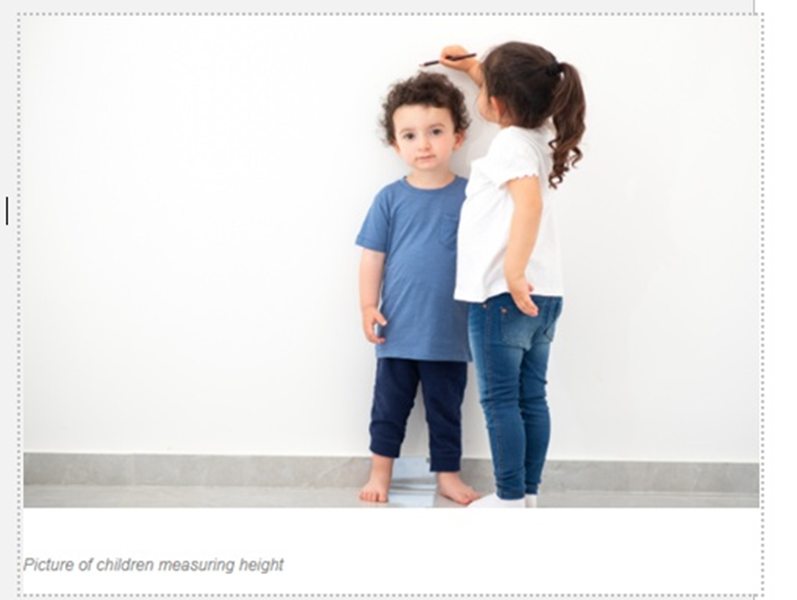
For children over 2 years old, this guide gives instructions on measuring height. If you need further help, ask your child’s GP, Health Visitor or School Nurse.
For children under 2 years old, please ask your Health Visitor or GP to measure your child’s weight and length.
For more information: Talking to your child about weight – a guide for parents and caregivers of children aged 4-11 years (PDF)