
Fun Activities for Health and Wellbeing
Helping your child to enjoy being active
Enjoying moving our bodies and being physically active is hugely important for our health and wellbeing.
Physical activity doesn’t have to be an organised sport (although of course it can be); a lot of the time it is about having fun and moving our body. Play is the way that children get the most activity. It is essential for all aspects of their development. Active play of all kinds helps improve co-ordination, physical confidence and creativity, as well as physical fitness. Playing together as a family or with others improves communication and social confidence, as well as emotional and cognitive development.
Look for opportunities to fit a bit more activity into everyday life. Suggestions for fun things to do:
- Over time we can build up to the recommended levels of physical activity for birth to 5 and 5 to 18.
- Get outside in the fresh air at your local park or anywhere else.
- Make up games while you are outside, e.g. treasure hunts, hide and seek, tig.
- Have a big dance party around the house!
- As a parent or carer role model physical activity purely for enjoyment.
- Make everyday journeys active by walking, wheeling, cycling, scooting or skipping…or however you like!
Remember anything is better than nothing, and a little bit more is better still.
Physical Activity Resources
There are lots of places to get inspiration and ideas to be active:
Baby & Toddler books are provided by your Health Visitor and Pre-school Books are handed out via ELCC providers, as part of the Bookbug pack; and the series of books is also available to borrow from your local library.]
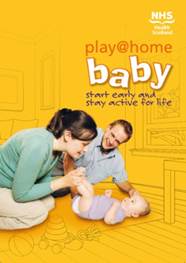
An easy-to-follow guide to a beneficial, suitable and safe baby exercise programme to be used daily with babies from birth to 1 year.
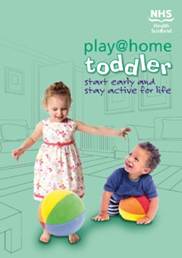
An easy-to-follow guide to a beneficial, suitable and safe toddler exercise programme for 1- to 3-year-olds.
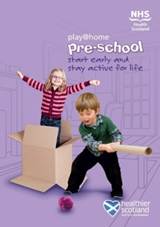
An easy-to-follow guide to a beneficial, suitable and safe child exercise programme for 3- to 5-year-olds.
Parent Club has a good range of play and activities for different age groups – Activities & Play | Parent Club NHS UK has some great ideas for Disney related shake up games – 10 Minute Shake Up games – Healthier Families – NHS
