
Thinking about improving your family’s health can feel like a big step but some small changes can make a big difference. A good place to start is with what you eat and how you move
Your family’s diet should be varied and colourful, including a mix of foods with different flavours and textures. This helps everyone enjoy mealtimes while getting the range of nutrients their bodies need to stay healthy, it’s just about balancing energy, improving our range of vitamins and minerals is key.
The Eatwell Guide is a great tool to help guide what we eat, It shows the types and proportions of foods that make up a healthy diet, it is used in our schools to teach children about what a healthy diet is so your children will be familiar with it.
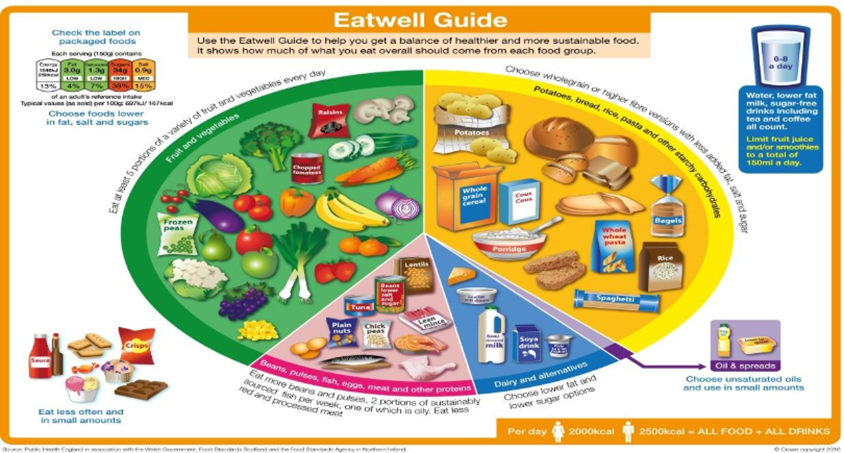
A healthy diet should include: plenty of fruit, vegetables, and starchy carbohydrates; some dairy or dairy alternatives; and good sources of protein like beans, pulses, fish, eggs, or meat. The guide isn’t about every plate being “perfect,” but about balance across the day or week.
In rural areas we can sometimes have a limited choice and prices of some fresh items are higher, canned or frozen fruit and vegetables are a suitable alternative to fresh and reduce waste.
Top Tips
• Try new foods.
• Base most of their diet on whole foods.
• Give more vegetables, fruit, fish, nuts* and seeds.
• Switch to rapeseed or olive oil.
• Include some high fibre wholegrain foods.
• Limit red and processed meat.
• Cut down on sugar and salt.
• Offer 6-8 glasses of water, milk or sugar free drinks a day.
• Try not to label food as good or bad, try ‘every day’ and ‘sometimes’ food instead. Forbidding certain food can make it more desirable.
* Warning: do not give whole nuts to children under 5 as there is a choking risk.
Some recipes for you to try at home
Microsoft Word – Recipe File.docx
