Portion Sizes
Children’s appetites can vary for a number of reasons; some children will eat more, and some will eat less. It is normal for a child’s appetite to vary across a week and as they grow. Portion sizes should be varied to meet the needs of each child.
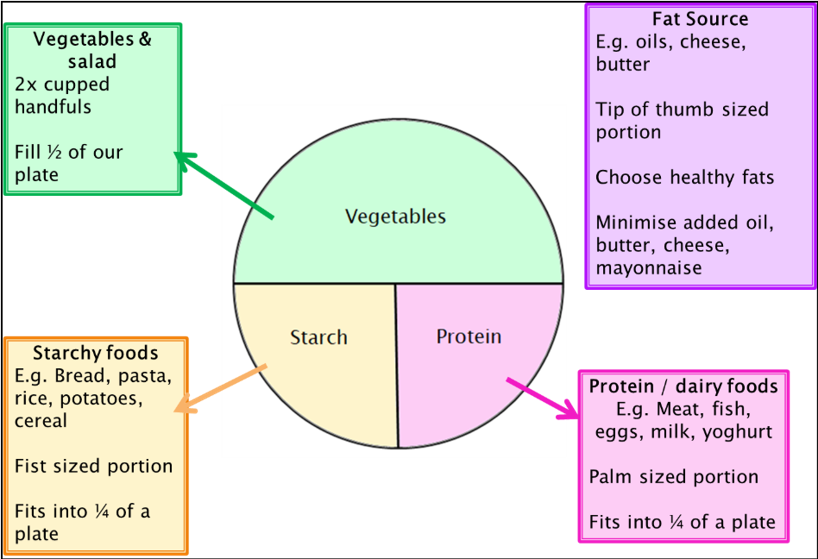
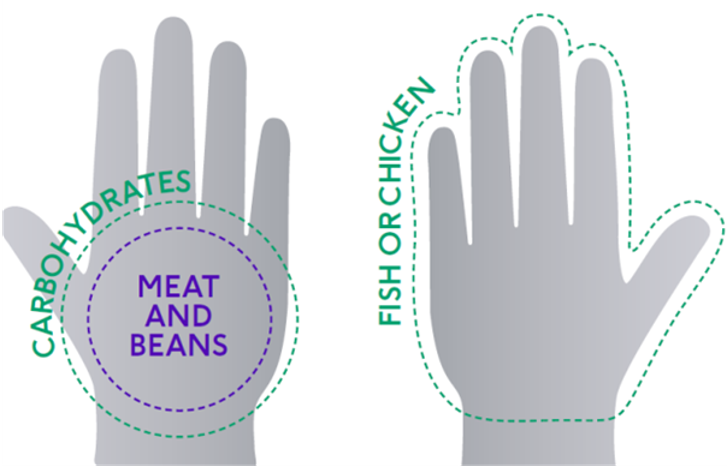
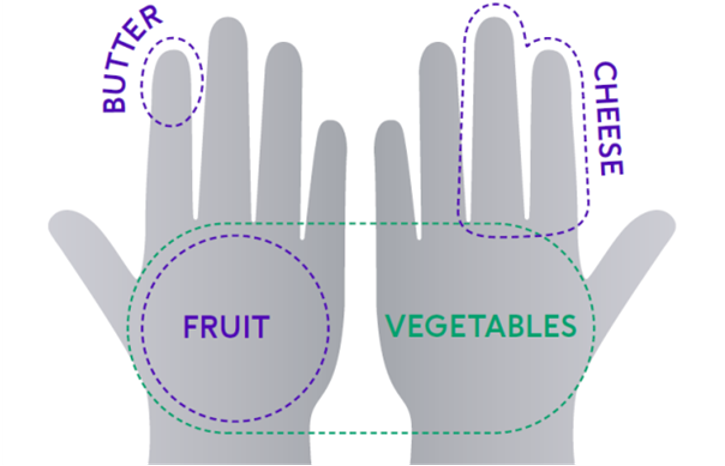
There are no standard guidelines for portion sizes in the UK. However, a simple way to work out the suitable portion size is to use our own hand as a guide.
Remember- our hands are all different sizes and so are our portion size needs.
Top Tips
- Start meals with small servings, let children ask for more if they are still hungry
- Be aware that pre-packed meals are usually sold as adult portions, children may not need the full serving
- Use smaller plates and bowls for children to help with portion control
- Avoid making children finish everything on their plate or eat more than they want to
- Encourage children to eat slowly and have set mealtimes
- Thirst can be confused with hunger. Try drinking a glass of water instead of eating an extra snack close to a main meal time
- Base meals on the EatWell Guide
The Eatwell Guide shows the types and proportions of foods needed to make up a healthy balanced diet with plenty of fruit, vegetables and starchy carbohydrates plus some dairy and dairy alternatives, beans, pulses, fish, eggs, meat and other proteins. The proportions shown are representative of the foods that should be consumed over a day or even a week, not necessarily at each meal.
At each meal, our plates should be balanced as half the plate being made up of fruit or vegetables, one quarter being carbohydrates and one quarter being protein/dairy, as shown below: